Current PhD students
Baris Erürk
In his PhD project, Baris researches the politicization of the EU external relations, using the EU-Turkey relations as a case country. Detailly, he perceives politicization through political contestation as a potential explanatory dynamic for the EU’s external affairs. From this perspective, he argues going beyond the “end product” of the external affairs and framing the structure of the politicization process. To shed more light on this perspective, he studies the EU’s supranational institutions: The European Commission and the European Parliament. With a mixed research method including semi-structured interviews, roll-call vote analysis, and parliamentary written questions, Baris attempts to crystallize the multi-level identities of members of supranational institutions and how it shapes MEPs, EPGs, and Commission officials political actions. Turkey provides a window of opportunities as the EU-Turkey relations cover a wide range of the EU’s external affairs. All in all, the study aims for both theoretical and practical application for the EU Foreign Affairs.
Sungmi Shin
Sunmig works in the NWO-funded project Party-Political Contestation of the Liberal International Order. Sungmi is studying the party politics of foreign policy in South Korea and Japan.
Martina Stankova
Martina works in the NWO-funded project Party-Political Contestation of the Liberal International Order. She is studying the party politics of foreign policy in the Czech Republic and Slovakia.
Richard Sonneveld
In his PhD project, Richard studies the party politics of foreign policy in the Netherlands. The overarching question in his research is how and why political parties in the Netherlands position themselves on foreign policy the way they do, and how these positions have changed over time. The historically large number of parties in parliament and the country’s active involvement in international politics makes the Netherlands a promising case study for understanding the structure of party competition. Richard’s research will be based on the analysis of parliamentary voting data on a number of foreign policy areas, among which military deployments and the ratification of international treaties. Having previously worked as a political aide for several MP’s in the Dutch parliament makes him uniquely equipped to conduct this research.
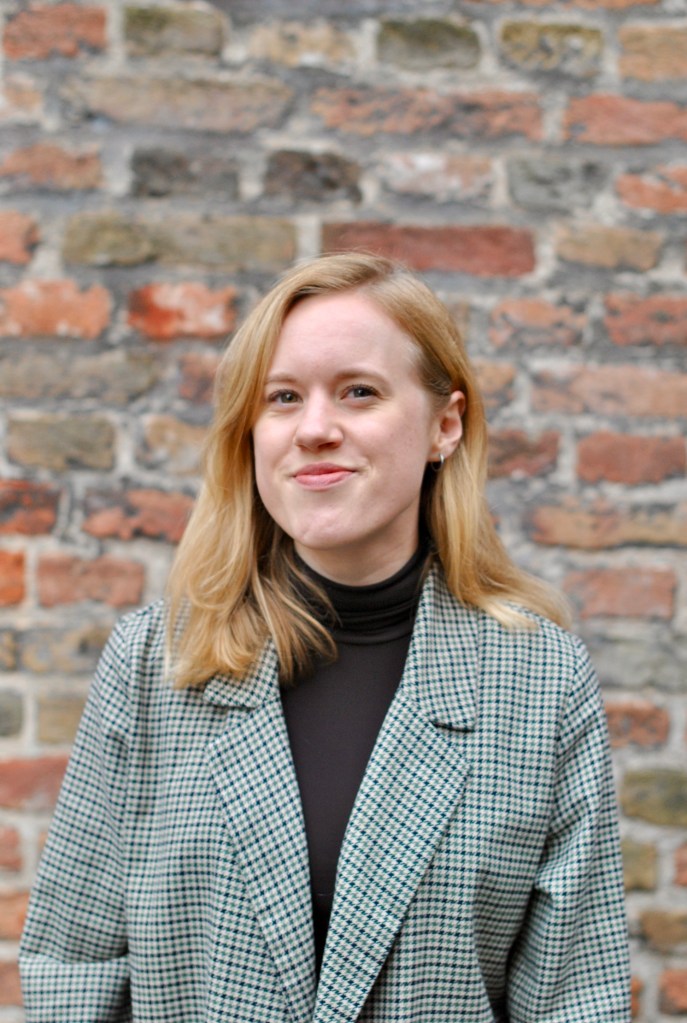
Nina researches how security – and the role of the military therein – is currently being reimagined in Sweden and the Netherlands. In a time when the countries’ armed forces, like many others in Western Europe, are moving away from a focus on missions abroad to territorial defense and preparedness, she explores how official narratives regarding security, military, and defense reforms are evolving, and how these narratives resonate with the public.
Former PhD students
Michal Onderco
Michal’s PhD project looked at reasons why states chose to adopt a specific stance on the so-called “rogue states” – norm-breakers in international relations. Drawing on both liberal and realist traditions, Michal’s research argued that it was a mix of domestic norms and power-politics considerations which influenced states’ foreign policy. In the course of his PhD, Michal became interested in the countries of the Global South, and published a book Iran’s Nuclear Program and the Global South: The Foreign Policy of India, Brazil, and South Africa (Palgrave, 2015)
Michal continues to be interested in the Global South, but also in the drivers of coercive behavior, and influence of domestic politics on foreign policy.
Michal’s research had been funded with a grant by the NWO, the Dutch Science Association. He defended his PhD in September 2014. He has been Max Weber Fellow at the European University Institute, Florence, Italy in 2014/15, Since 2022 he is full professor of international relations at the Department of Public Administration and Sociology, Erasmus University Rotterdam.
More about Michal can be found here.
Falk Ostermann
Falk’s PhD project has dealt with French security and defense policy in NATO and the EU under president Sarkozy and longer patterns of continuity and change in French security and defense. His research gives testament to changes in the French conceptualization of the European security and defense architecture, suggests a normalization of French CSDP policies, and it unveils an concomitant, ex-post re-signification of France’s NATO reintegration move in 2009. On the basis of these results, he argues that a new French foreign policy identity and a new approach to security and defense cooperation have come into being. This bears broader consequences for European and Euro-Atlantic cooperation in major institutions like the EU and NATO. On the grounds of this work, Falk has published related articles and the book Security, Defense Discourse and Identity in NATO and Europe. How France Changed Foreign Policy (Routledge, 2019).
Falk’s current research interests include the party politics of foreign and security policy, NATO, CSDP, identity, and practice theory.
His methodological expertise is centered on constructivism, Interpretive Policy Analysis, Critical Security Studies, and the Discourse Theory of the Essex School, which he has developed further in the realm of Foreign Policy Analysis.
Falk’s research was funded with a full-time research grant by the Friedrich Ebert Foundation. He has defended his PhD in April 2015. After positions at the VU and Justus Liebig University Giessen, Falk has been a lecturer at Christian Albrechts University Kiel.
More information about Falk can be found here.
Glenn Diesen
Glenn has researched how the post-Cold War trend towards empowerment of the inter-democratic community affects Russian cooperation with European security organisations. After the Cold War the exclusive inter-democratic EU and NATO have empowered themselves by expanding territory and absorbing responsibilities from the inclusive UN and OSCE. Thus, the post-Cold War trend in European security is characterised by empowerment of exclusive and expanding Western security organisations that are not constrained by veto from excluded states, and the elevated role of liberal democracy in European security by linking democracy directly with security.
The research aimed to assess how Russia cooperates with a self-empowered inter-democratic community, where the elevated role of liberal democracy in European security challenges sovereignty and international law. Russia cooperates with Europe through NATO and EU ‘partnerships’ where Russia does not have veto-power, while the OSCE is transformed and supplemented with Western NGOs to monitor human rights in the East. This security structure creates a teacher/learner relationship between the West and Russia that can be viewed as (1) a ‘socialising’ process where Russia gravitates towards the West as it adapts to liberal democratic values. The other view is that (2) democracy follows traditional ideological / idealist internationalism, where power is centralised in the West and the Russia is subordinated in Europe.
Glenn has defended his PhD in September 2014 and is now an associate professor at the university of Southern Norway.
Biejan Poor Toulabi
In his PhD project, Biejan sets out to investigate under which combinations of conditions states decide to develop or forgo developing nuclear, biological, or chemical weapons. For this purpose, he employs Qualitative Comparative Analysis (QCA).
Today, the spread of weapons of mass destruction is a pressing international concern as ever. This is in part evident by the trove of scholarly works trying to unravel what causes states to seek or forgo nuclear weapons. Theorizing about the causes of proliferation has been particularly fertile since the end of the Cold War, with scholars providing accounts of economic, normative, legal, psychological, prestige-based, and domestic political dimensions of nuclear proliferation in addition to traditional military-security based ones. Two important conclusions can be drawn from this extensive body of work: 1) the nuclear proliferation puzzle is characterized by causal complexity, where no single theoretical account can sufficiently explain why states opt for or forgo nuclear weapons; and 2) little attention is given to the drivers of biological and chemical weapons proliferation other than the assumption that states will opt for them when they are unable to procure nuclear weapons.
Dieuwertje Kuipers
Dieuwertje’s dissertation was titled “Gambling with lives for political survival. How democratic governments respond to casualties during military interventions” and was part of the NWO-funded project “High Risk Politics“, led by Barbara Vis. I co-supervised Dieuwertje together with Barbara and Gijs Schumacher between 2012 and 2018. One of the chapters of Dieuwertje’s dissertation appeared in the special issue of Foreign Policy Analysis that Tapio and I co-edited. It can be found here.
Rosanne Anholt
Rosanne defended her dissertation “Governing (in)security and the politics of resilience. The politics, policy, and practice of building resilience in fragile and conflict-affected contexts” on 11 January 2022. Chapters were publiashed as articles and can be found here:
Resilience as the EU Global Strategy’s new leitmotif: pragmatic, problematic or promising?
Resilience as the EU Global Strategy’s new leitmotif: pragmatic, problematic or promising?
Resilience in Practice: Responding to the Refugee Crisis in Turkey, Jordan, and Lebanon
Resilience in the European Union External Action
Rosanne is Assistant Professor of Conflict Studies at Radboud Universiteit Nijmegen/Netherlands.
Xue Mi
Xue Mi defended her dissertation “European Strategic Culture. Continuity in National Strategic Cultures of Convergence towards an EU Strategic Culture?” on 28 April 2022. She examines the strategic cultures of Germany, Poland and Ireland as well as of the European Union with the help of content analysis.
Jilong Yang
Jilong Yang defended his dissertation “China’s Strategic Shift and Sino-EU Relations in Global Governance The Quest for Identity?” on 12 October 2022. Jilong’s main supervisor was Bastiaan van Apeldoorn with Nana de Graaff and me completing the superviory team.
Birsen Erdogan
I supervised Birsen Erdogan together with Marijn Hoijtink. Birsen defended her disssertation ‘Ambivalent Identity, Antagonistic Others and Hegemonic Projects. A Poststructuralist Analysis of Türkiye’s Articulations of Multilateral Military Interventions in Syria Libya, and Selected Peacekeeping Missions’ on 14 April 2025. Parts pf her work can be found in her monograph ‘Humanitarian Intervention and the Responsibility to Protect. Turkish Foreign Policy Discourse‘. Birsen works at Maastricht University College.
Sanne Groothuis
In September 2025, Sanne Groothuis defended her dissertation on “Racialising religion: Investigating counter radicalisation policies in the Netherlands“. Chapters of her dissertation had been published in Critical Studies on Terrorism and Acta Politica, The starting point of Sanne’s dissertation is the criticism that counter radicalisation and counter violent extremism (CR/CVE) policies result in anti-Muslim racism. These policies aim to prevent trajectories toward violent extremism and terrorism but are often accused of embedding racialised notions of risk, particularly by framing Muslim identity and religious expression as inherently suspicious. Sanne examines whether these effects are embedded in policy frameworks or emerge in the translation of policies to daily practices. Sanne works at TwynstraGudde.
Christina Stremming
Christina’s dissertation adressed Germany’s contested role as a security actor. It was supervised by Margit Bussmann at the University of Greifswald with me as a co-supervisor. Christina moved on to a postdoc position at the Helmut-Schmidt-Universität in Hamburg. One chapter of her dissertation was published in the Cambridge Review of International Affairs.
 Wolfgang Wagner